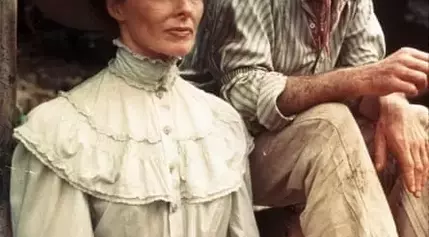
In the spring of 1951, Humphrey Bogart embarked on a remarkable journey across the Atlantic to make "The African Queen", a classic Technicolor film. Accompanied by his wife, Lauren Bacall, he brought along his whisky and cigarettes. However, he left his two-year-old son in the care of the nanny, believing the jungle to be dangerous and that his absence would only be for six months. As the plane took off from the airport gangplank, with the kid waving back from the employee's arms, a tragic event unfolded - the nanny suffered a brain haemorrhage and died on the tarmac.
Stephen Bogart's Perspective
After Bogart and Bacall's plane landed, Bacall received the distressing news. Mrs Hartley had passed away, leaving her son effectively on his own. Faced with a difficult choice, she decided to go to Africa with Bogart, Huston, and Katharine Hepburn, leaving the boy in the care of his grandparents. Stephen understands his mother's decision but isn't sure he would have made the same choice.Throughout his life, Stephen has faced various challenges. His parents' early separation was a significant event that he had to deal with. Now a 75-year-old retired TV news producer with a house in Florida, a second wife named Carla, and a white puppy named Wiley, he has made peace with the past. He emphasizes that he is not a student of his father but needed to discover his own identity.
The New Documentary
Recently, Stephen contributed to a new documentary - "Bogart: Life Comes in Flashes". This documentary uncovers previously unseen material from the archive and is narrated mainly by the actor himself. It covers Bogart's creative apprenticeship, from his early days as a foppish stage performer to his rise to superstardom in Warner gangster flicks. It also provides insights into his off-screen life, analyzing his three marriages, showing how his wit could sometimes turn cruel, and dealing with his cancer diagnosis. In his final months, Bogart's health deteriorated significantly, but he refused to believe he would die.
Bogart's Dual Nature
Bogart is now an integral part of our cultural fabric, widely mimicked and quoted. He is considered the all-time greatest screen actor by the American Film Institute. Stephen believes that no other dead star has endured as well. Both Bogart and Cary Grant were complex figures with a certain duality. Grant's low-born roots provided a counterbalance to his glamorous screen image, while Bogart came from a rarefied New York background and embodied a similar duality. His hard-boiled exterior concealed an air of refinement, and his wary intelligence gave his tough guys depth and texture. He was both an American cinema fallen angel and a shop-soiled cynic, often drawn to darkness but also groping for the light.In "In a Lonely Place", Nicholas Ray's 50s noir, Bogart played a screenwriter accused of murder. Stephen considers this one of his father's most personal roles as loneliness was always a part of his life. He was a loner who was always searching for something, with the sea being his favorite.
Family Life and Legacy
Stephen and his younger sister Leslie didn't know their father well as he was middle-aged when they were born and constantly busy. When he came home from work, he would have dinner with his mother and then the children would leave. This was the norm during those times.Bogart started a family with Bacall, hoping that a child would stay with her and remind her of him. After his death, Bacall had to navigate through life with two young children. Stephen was a reminder of his father but also a reminder of his absence. The presence of pictures of Bogart around the apartment added to the complexity.Bacall had to set her own course after Bogart's death and figure out who she was. Stephen acknowledges that she didn't do badly by them but that it was psychologically tough for her.In 2012, the steamboat from "The African Queen" was discovered rusting at a marina in Key Largo. It was restored and put back on the water, and Stephen and Leslie were invited on board and given commemorative souvenirs. While it was a fun experience, it didn't have a significant impact on him.In conclusion, Stephen is happier in the present with his wife and puppy. He believes that nostalgia is a trap and that it's best to move forward and leave the past behind.